
Last updated
What makes a porta potty ADA compliant?
Size and clearance, mostly. An ADA-compliant unit needs a 60 inch diameter turning circle inside per ADA Standards section 304.3.1, plus a door opening at least 32 inches wide under ADA Standards section 404.2.3. The route leading up to it matters too: ADA Standards section 403.5.1 calls for a clear path at least 36 inches wide, and the ground under it has to be stable, firm, and slip resistant per ADA Standards section 302.1. That rules out loose gravel or soft turf as a placement spot. Inside the unit, grab bars and the flush mechanism need to sit within reach ranges set by ADA Standards section 308.2.1, and any handle or latch has to open with one hand and no more than 5 pounds of force per ADA Standards section 309.4. Mountain View Porta Pros builds every ADA accessible porta potty to these specs, not a standard unit with a ramp bolted on. If you are comparing it against a standard porta potty rental, the footprint difference is real: an ADA unit needs more clearance on every side.
How many ADA units does a Mountain View job site need?
One accessible unit per cluster is the floor, not a suggestion you can round down from. ADA Standards section 213.2 is explicit: wherever portable toilets are grouped together, at least 5 percent must be accessible, and that number never drops below one, even if you only have two or three units total. A four-unit bank on a construction site off Central Expressway still needs one ADA stall. Pair that with OSHA 1926.51(c), which sets the baseline toilet ratio for construction crews at one facility per 20 workers, one toilet seat and one urinal per 40 from 20 up, and one per 50 once you cross 200 workers. Run both numbers and take whichever requires more units. If you are staging equipment or a crew is working out near Martinez, 1.3 miles south, or Vine Hill, 1.9 miles east, the same math applies regardless of jurisdiction line. Use the how many porta potties do I need guide to size the full bank before you order.
Where should ADA units be placed on site?
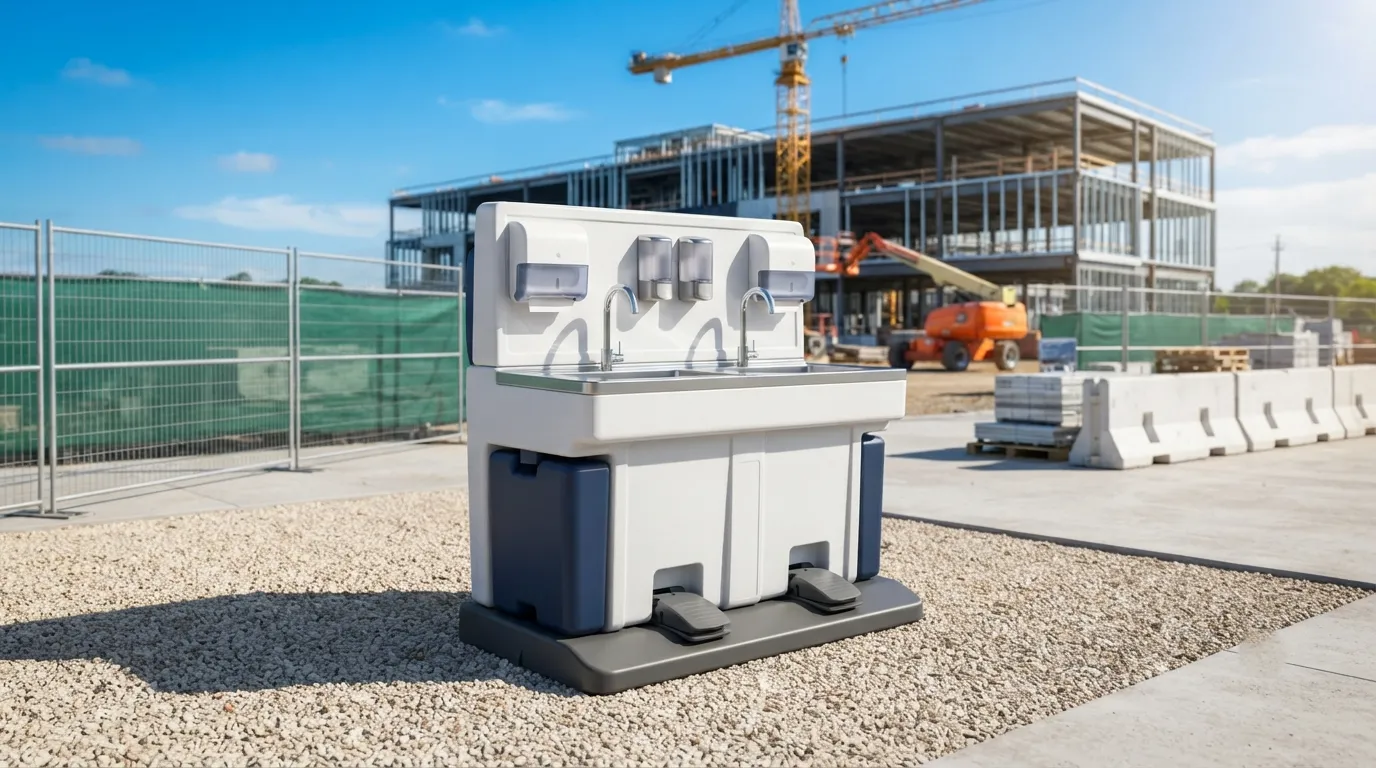
Placement is not just about legal compliance, it is about whether the unit is actually usable. The approach path needs a firm, level surface for the full 36 inches of clearance width, and if there is any grade change, a ramp cannot exceed a 1:12 running slope under ADA Standards section 405.2. That means a curb cut or a plywood ramp thrown down at the last minute usually will not pass. Delivery access matters too: our trucks need roughly 60 feet of straight clearance behind them to set a unit down safely, so tight urban lots in downtown Mountain View sometimes require the ADA unit to sit further from the work zone than the standard units. Check the porta potty placement guide before delivery day, especially for event sites where crowd flow adds another layer of routing. Event producers running something at a venue near Pleasant Hill, 7.1 miles southeast, should coordinate placement with both ADA clearance rules and the venue's own accessible-parking-to-restroom path.
Does an ADA restroom trailer meet the same standards?
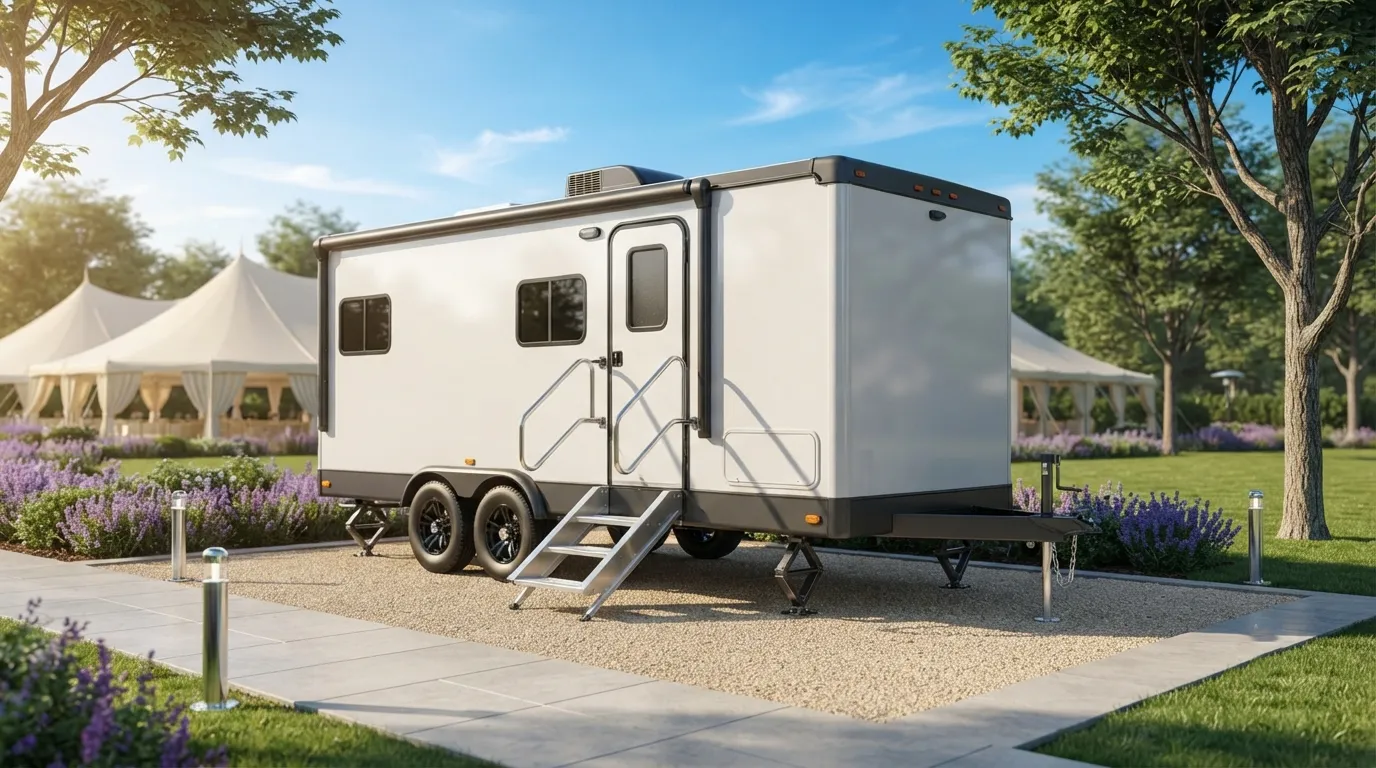
Yes, and for events with mixed crowds it is often the better call. A restroom trailer rental built with an ADA stall still has to meet the same 32 inch door and 60 inch turning circle specs as a standalone unit, but it adds a stable, wheeled platform instead of asking someone to navigate uneven ground to a stand-alone toilet. The 2 stall restroom trailer and 4 stall restroom trailer options both come with ADA-configured stalls available. For a wedding or a corporate event in Mountain View where guests are dressed up and moving across a lawn, that platform stability is not a small thing. If you are weighing trailers against standard units for a large event, the restroom trailer rental cost page breaks down where the price gap actually comes from.
ADA unit pricing at a glance
| unit | duration | typical price |
|---|---|---|
| ADA portable toilet | day | $230 |
| ADA portable toilet | week | $185 |
An ADA unit rented by the day runs higher than the same unit booked by the week, since day rates carry more overhead per unit of time. Weekend rates for ADA units tend to land in the $199 to $300 range, which suits a Saturday event better than a full week's booking. For a longer build near Benicia, 7.2 miles northwest, or Lafayette, 13.5 miles south, the weekly rate is the better deal. Full breakdowns live on the porta potty rental cost and porta potty rental per day pages, and request a quote if you need an exact count for a mixed site.
Do I need an ADA unit if I only have two porta potties?
Yes. ADA Standards section 213.2 never drops below one accessible unit, no matter how small the cluster. Two standard units plus zero ADA units does not clear the 5 percent floor. Order at least one ADA accessible porta potty alongside them.
Can an ADA unit be placed on gravel or grass?
Not if it fails the stability test. ADA Standards section 302.1 requires a firm, slip-resistant surface. Loose gravel and soft turf often do not qualify, so plan for plywood or a paved spot using the porta potty placement guide.
Is an ADA restroom trailer required for weddings?
Not strictly, but it is common practice. A wedding restroom rental with an ADA stall covers guests using mobility devices without singling out a separate unit. Check the luxury restroom trailer line if appearance matters as much as access.
How wide does the path to an ADA unit need to be?
At least 36 inches, per ADA Standards section 403.5.1. That clearance has to run the full distance from parking or the venue entrance to the unit door, not just the last few feet.
Does OSHA require ADA units on construction sites?
OSHA 1926.51(c) sets toilet ratios by crew size but does not itself set ADA specs. ADA Standards section 213.2 is the accessibility requirement layered on top. Review both on the OSHA portable toilet requirements page before ordering.
Next step
Get a delivery date
Tell us the address, the dates and the headcount. We size the order and confirm the route.