
Last updated
What Does Farm Sanitation Law Actually Require?
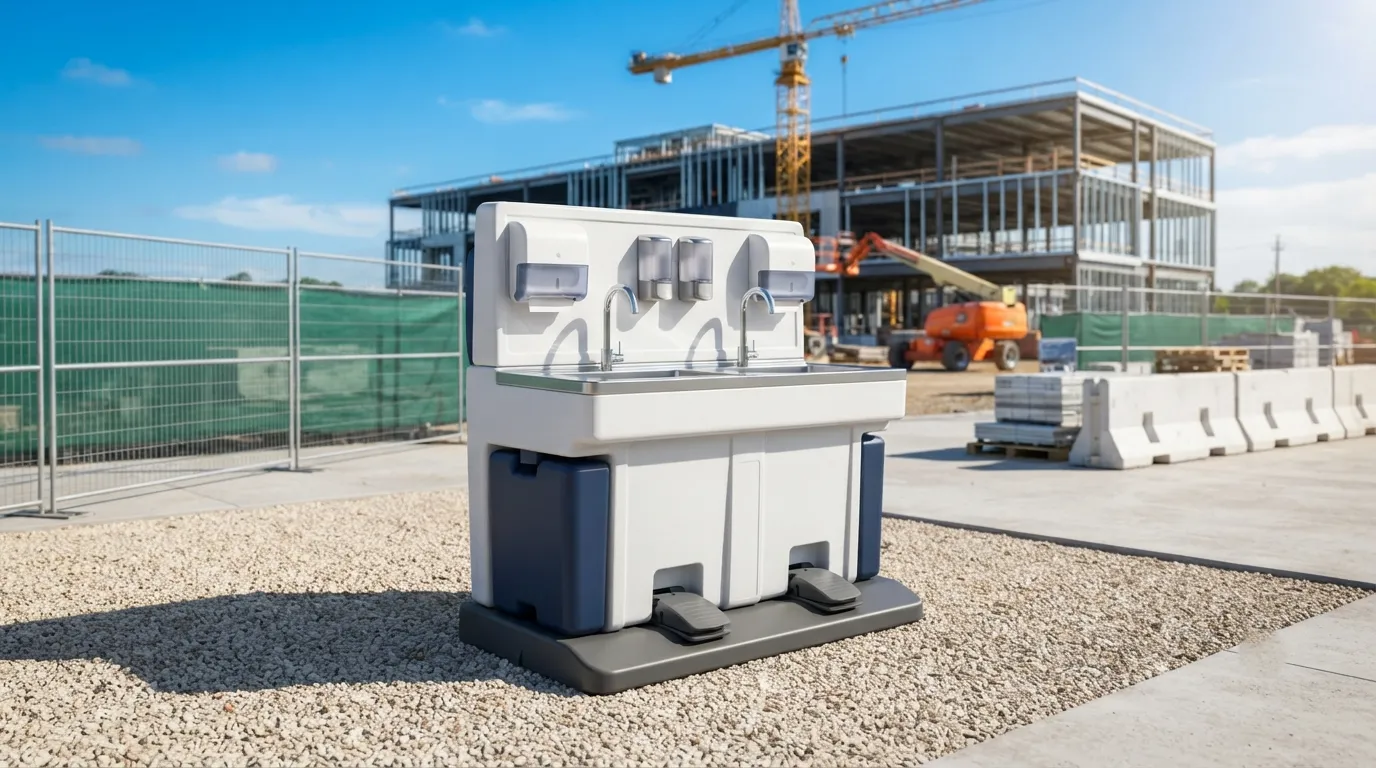
If your hand-labor crew works Mountain View fields, orchards or vineyards, OSHA 1928.110 sets the baseline: potable water, a toilet, and handwashing access for every 20 employees, positioned so nobody walks more than a quarter mile to reach one. That is stricter than the general construction standard, OSHA 1926.51(c)(1), which allows one toilet for crews of 20 or fewer but scales differently past that. Farm operations often run crews across scattered acreage, so we place multiple standard units rather than one bank near the barn. Water matters too. OSHA 1926.51(a)(1) calls for an adequate supply of potable water at any place of employment, and a handwashing station or portable sink paired with each toilet cluster satisfies that alongside the toilet count. If your crew handles pesticides or herbicides, OSHA 1926.51(f)(1) kicks in specifically for washing after contact with those chemicals, and a sanitizer station alone will not cover it under 29 CFR 1910.141(d)(2), which requires soap and towels or a hand-drying device, not sanitizer as a substitute. We walk farm managers through unit counts using our how many porta potties do I need guide before quoting, since crew size shifts by season.
Where Should Units Go on a Working Farm?
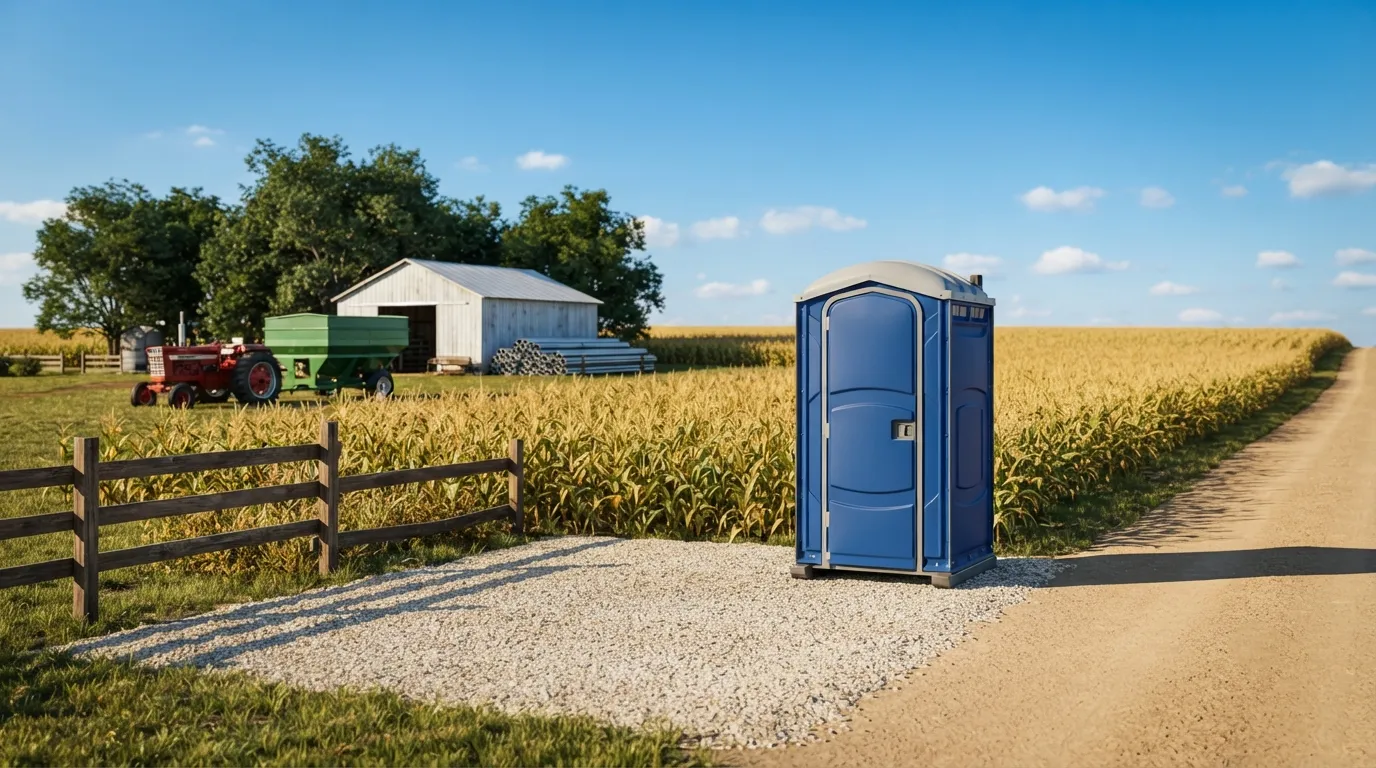
Placement on farmland is different from a job site. Ground has to hold a 60 to 70 gallon tank unit that stands about 92 inches tall and sits on a 44 by 48 inch footprint, and that footprint needs to be level enough that service trucks can reach it without tearing up a field road. We check access before delivery, the same way we check roll-off dumpster sites, because a stuck truck costs everyone time. Irrigation ditches, seasonal mud and harvest traffic all factor into where a unit lands, and we adjust placement as planting gives way to harvest. Our porta potty placement guide covers ground stability in more detail. For farms running packing sheds or processing areas, a deluxe flushable unit or small restroom trailer sometimes makes more sense than a standard unit, especially if crew size climbs during harvest. If the farm has any public-facing element, a farm stand, agritourism weekends, a corn maze, ADA accessible units come into play too. Under ADA Standards section 213.2, when single-user portable units are clustered, at least 5 percent, and never fewer than one, has to be accessible. That rule applies whether it is a construction crew or a u-pick event drawing families from Martinez, 1.3 miles south, or Vine Hill, 1.9 miles east.
How Long Can I Rent for Harvest Season?
Rentals run by the day, week or month, and farm operations usually land in the week-to-month range since harvest and planting seasons stretch on. A monthly porta potty rental for a standard unit runs $125 to $325, which tracks lower per-day than a weekend rental once you're past a few weeks. Weekly rentals run $130 to $500 depending on unit count and service frequency, and ANSI/PSAI Z4.3, the industry sanitation service standard, sets one service visit per week as the baseline for up to 10 users over a 40 hour week. Larger crews need more frequent service, and we scale visit schedules to headcount rather than sticking to a fixed weekly stop. Farms near Pleasant Hill, 7.1 miles southeast, and Benicia, 7.2 miles northwest, often run multi-site operations, and we coordinate delivery and pump-outs across locations on one schedule. Check current numbers on our porta potty rental cost and porta potty rental per day pages before locking in a season-long contract.
| unit | duration | typical price |
|---|---|---|
| standard | week | $200 |
| standard | month | $200 |
| deluxe | week | $250 |
| ada | week | $185 |
Farms running septic systems for on-site housing or packing facilities should also plan pump-outs. A residential septic tank typically needs pumping every 3 to 5 years depending on tank size and household or crew load, and our septic pumping service covers both scheduled and emergency septic service calls. Processing sheds with fryers or wash lines may need a grease trap pumped once fats, oils, grease and solids hit 25 percent of liquid depth. For farms clearing brush or old equipment ahead of a new planting cycle, a construction dumpster rental or 20 yard dumpster handles debris faster than hauling it out truckload by truckload.
How many toilets does a 15-person harvest crew need?
Under OSHA 1928.110, one toilet per 20 workers is the field sanitation minimum, so a 15-person crew needs one unit plus a handwashing station, positioned within a quarter mile walk of the work area.
Do I need a permit to place units on my own farmland?
Placement on private agricultural land is usually simpler than public right-of-way work, but confirm with Mountain View before setup. See our porta potty permit requirements page for what to check.
Can I rent just one unit for a small vineyard crew?
Yes. Small crews under 20 workers need only one standard unit under OSHA 1928.110, though seasonal help spikes may push you toward two units during harvest weeks.
What happens in freezing weather during winter pruning season?
Cold weather changes servicing needs and tank chemistry. Our porta potty in winter guide covers what changes for units left out during Mountain View's cooler months.
Do farm units need handwashing stations too?
Yes, under OSHA 1926.51(a)(1) potable water access is required, and a paired handwashing station or portable sink meets that alongside each toilet cluster.
Next step
Get a delivery date
Tell us the address, the dates and the headcount. We size the order and confirm the route.