
Last updated
What Does OSHA Require For Portable Toilets On A Construction Site?
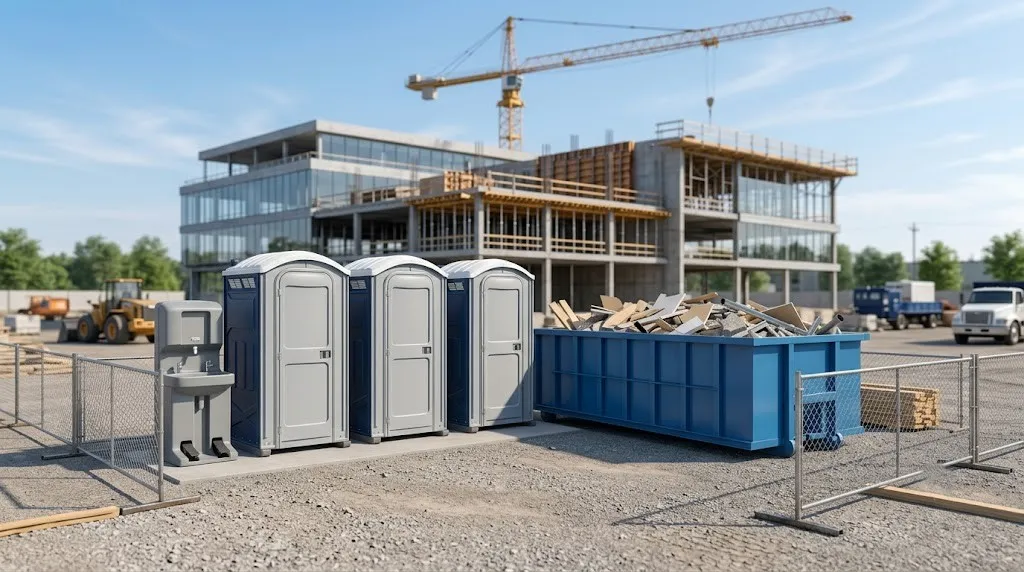
OSHA 1926.51(c)(1) is the rule every Mountain View general contractor should have taped inside the site trailer. It works on a sliding scale: one toilet facility for 20 workers or fewer, then one toilet seat and one urinal per 40 workers once you cross 20, and one per 50 once you hit 200 workers. Cal OSHA follows a comparable structure for crews working under California jurisdiction, and Texas sites generally apply the federal standard, so a contractor running construction portable toilet rental across state lines should check the local agency before assuming California numbers travel. Potable water is a separate requirement under OSHA 1926.51(a)(1), and it does not double as a handwashing rule. If your crew applies coatings, herbicides or insecticides, OSHA 1926.51(f)(1) kicks in and specifically calls for washing facilities beyond the toilet count. Figuring out how many units that math actually produces for your headcount is worth running through our how many porta potties do I need guide before you call in an order, and the full breakdown lives on our OSHA portable toilet requirements page.
What Does Portable Toilet Rental For Construction Sites Cost?
A standard porta potty rental runs $100 to $350 a day, $130 to $500 for the week, and $125 to $325 a month, so longer jobs pencil out cheaper per day than a one-off weekend pour. Add a delivery fee, which lands between $50 and $150 for a week-long placement depending on how far the truck has to run. If the site needs an accessible unit, ADA Standards section 213.2 requires at least one accessible unit in any cluster, never fewer than one no matter how small the group. See full detail on our ADA accessible porta potty page.
| unit | day | week | month |
|---|---|---|---|
| standard | $100-$350 | $130-$500 | $125-$325 |
| ada | $200-$400 | $240-$400 | - |
| deluxe | $85-$1200 | $150-$290 | - |
Full pricing detail, including how delivery and service fees stack, is on our porta potty rental cost and porta potty rental per day pages. Jobs running past 30 days should look at our monthly porta potty rental rates instead of renewing weekly.
What Else Does A Mountain View Job Site Need Besides Toilets?
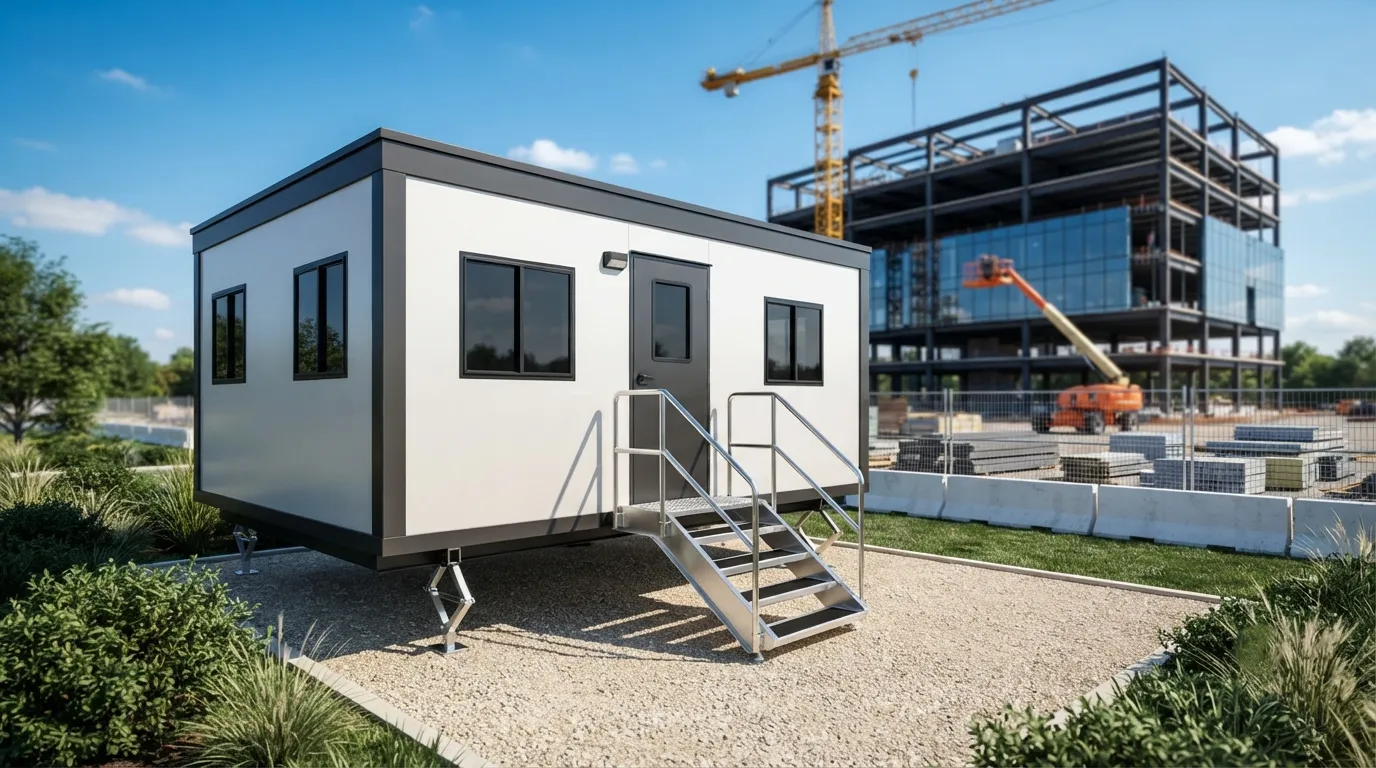
Toilets are one line item. Most Mountain View sites also need a dumpster, and a standard unit here runs $51 to $112 a day or $426 to $778 for the week, see our roll-off dumpster rental page for size breakdowns from 10 yard up through 40 yard. Debris removal ties directly to OSHA 1926.25, which requires scrap and debris cleared from work areas, and OSHA 1926.252 governs how waste gets disposed of, chutes and enclosures included. A roll-off delivery needs about 60 feet of straight clearance behind the truck, so walk that access route before scheduling. Sites near active traffic or public sidewalks often need temporary fence rental, priced $30 to $75 a day, and OSHA 1926.202 requires barricades that conform to ANSI D6.1 wherever workers need protecting from vehicle or pedestrian paths. Crews handling coatings or chemical trades should pair a handwashing station rental with their toilets, since 29 CFR 1910.141(d)(2) requires soap and towels or a drying device at wash stations, not hand sanitizer alone. Storage for tools and materials is covered under storage container rental, with monthly rates between $100 and $250.
Can Mountain View Porta Pros Deliver To Job Sites Near Martinez Or Pleasant Hill?
Yes. Mountain View Porta Pros services Mountain View directly and runs regular routes to nearby job sites, including Martinez 6.0 miles east, Vine Hill 6.8 miles south, Pleasant Hill 8.1 miles south, Benicia 8.4 miles east and Lafayette 10.4 miles southwest. A multi-site contractor working across those towns can consolidate delivery under one account rather than juggling separate vendors, which is worth asking about when you request a quote. For nighttime pours or early call times, OSHA 1926.56(a) sets minimum illumination levels for construction areas, and a light tower rental covers that requirement cleanly. Sites without permanent power should also look at a temporary power pole, and GFCI protection under OSHA 1926.404(b)(1)(ii) applies to that circuit regardless of job size. See our full list of nearby coverage on the service areas page, or browse porta potty rental in Mountain View directly for site-specific ordering.
How many porta potties does a 30 person crew need?
Under OSHA 1926.51(c)(1), 30 workers put you just past the 20-worker line, so you need one toilet seat and one urinal per 40 workers in that bracket. Practically, most Mountain View contractors round up to two units for buffer and cleaning rotation. Check our how many porta potties do I need guide for crew-size math.
Do I need a permit to place a dumpster or porta potty on a Mountain View street?
Placement in the public right of way needs confirming with the city before delivery. We do not have a verified Mountain View ordinance number to cite here, so check with the city rather than assume. See dumpster permit requirements and porta potty permit requirements for what to ask about.
How often are job site porta potties serviced?
ANSI/PSAI Z4.3 sets a baseline of one service visit per week for up to 10 users across a standard 40 hour work week. Busier sites or larger crews need more frequent pumping to stay ahead of capacity. Details on cleaning intervals are on our how often are porta potties cleaned page.
What is the difference between a standard and a deluxe unit for a job site?
A standard unit sits on a 60 to 70 gallon holding tank, measures about 44 by 48 inches on the ground and stands roughly 92 inches tall, built for basic crew use. A deluxe flushable porta potty adds a flush mechanism and sink, better suited to foreman trailers or client-facing sites.
Can I get emergency porta potty delivery if a unit fails mid-job?
Yes, call and we prioritize same-day swaps when a unit goes down mid-job. Downtime on an active construction site stalls inspections and payroll, so fast turnaround matters more than on a slow week. See emergency porta potty rental for how that process works.
Next step
Get a delivery date
Tell us the address, the dates and the headcount. We size the order and confirm the route.