
Last updated
How many restrooms does a county fair need?
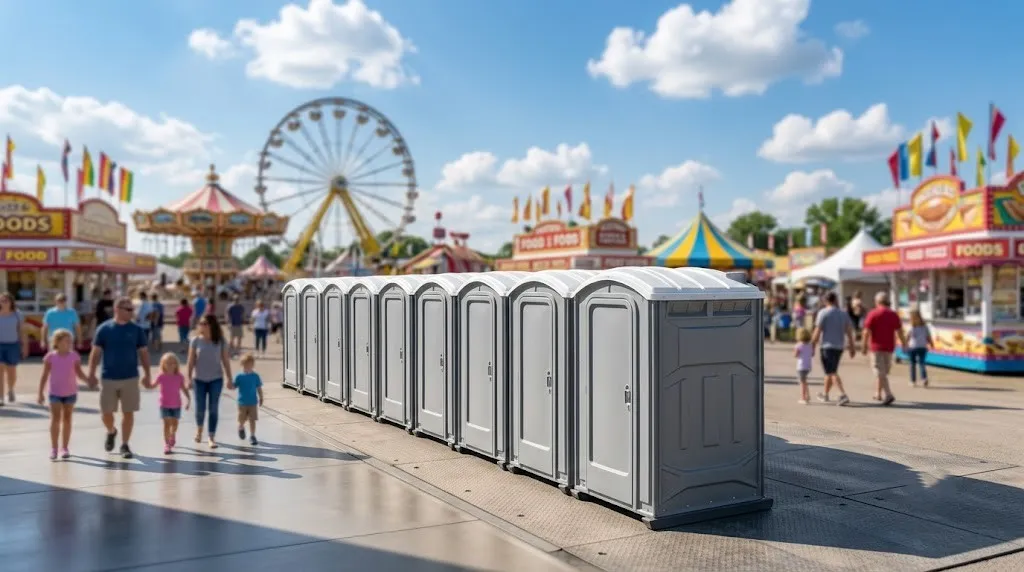
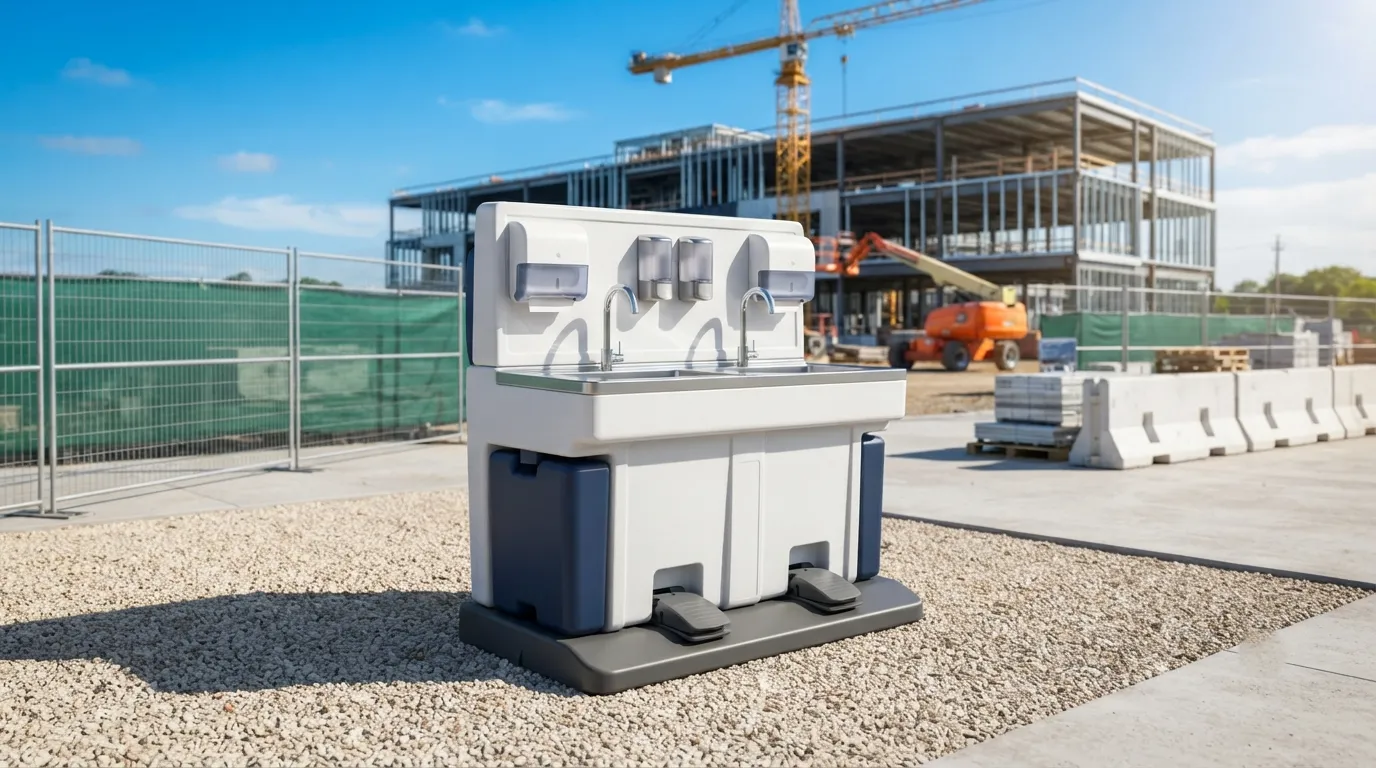
Start with OSHA 1926.51(c), which sets 1 toilet for every 20 workers on a job site. Fairs aren't construction sites, but the ratio is a decent floor for staff and vendors. Attendees are a different math problem entirely, because a fair pulls thousands through a gate over six or eight hours, and everyone hits the restroom near the same food stands and stages at the same time. We treat standard porta potty rental units as the backbone, then add clusters at the entrance, the beer garden and wherever the headline act draws a crowd. A porta potty placement guide helps map that out before the first unit lands. Every cluster needs an accessible unit too. ADA Standards section 213.2 requires at least 5 percent of clustered single-user toilets to be accessible, with a minimum of one no matter how small the cluster is. That means even a modest four-unit bank at a secondary gate needs an ADA accessible porta potty sitting right next to it, not tucked somewhere out of the way. If your event runs food vendors doing any spraying or coating work near the grounds, OSHA 1926.51(f)(1) requires washing facilities for that specific contaminant exposure, and a handwashing station rental covers it. For general foot traffic, a portable sink rental placed near food booths solves the everyday need. Not sure what the total should look like for your fairgrounds footprint? The how many porta potties do I need guide walks through gate counts, hours and vendor density in more detail than we can fit here.
What restroom options work best for a multi-day fair?
Multi-day fairs in Mountain View wear standard units down fast, so we mix in tougher options depending on the crowd. A single standard unit runs 60 to 70 gallons of holding tank capacity, which is plenty for a Saturday afternoon but tight across three straight days of fair traffic without a mid-run service. That's why longer fairs usually pair standard units with a service schedule instead of just dropping more toilets and walking away. For fairs drawing a nicer crowd, sponsor tents or a VIP area, a deluxe flushable porta potty gives guests something closer to a real bathroom. Bigger fairs with grandstand seating or a ticketed VIP section often step up to a restroom trailer rental, and a 4 stall restroom trailer handles steady mid-size traffic without a line wrapping around the building. For fairs with real budget and reputation on the line, a luxury restroom trailer works near the main stage or hospitality tent. Whatever mix you land on, ANSI/PSAI Z4.3 sets the baseline service interval at once per week for up to 10 users across a 40 hour week, and a multi-day fair blows past that fast, so we build a servicing plan around actual attendance instead of the baseline. Pair your restroom order with temporary fence rental to route foot traffic toward the units you actually placed, and a crowd control barrier rental keeps lines orderly near the biggest draws.
Are there permit rules for fair restrooms in Mountain View?
Placement in the public right of way, on fairground property abutting a street or near a permitted event footprint needs confirming with the City of Mountain View before delivery day. We don't guess at ordinance numbers here. If your fair sits on private fairground property set back from the road, the rules are usually simpler, but check anyway before trucks show up. Our porta potty permit requirements page walks through what to ask the city and when to ask it. Access matters just as much as permits: a roll-off or restroom trailer delivery needs about 60 feet of straight clearance behind the truck, so grounds crews should plan gate and pathway access before the trucks arrive, not the morning of. If your fairgrounds sit close to Martinez, 1.3 miles south, or Vine Hill, 1.9 miles east, we service both regularly and can often combine drops on the same route, which keeps delivery windows tighter. Pleasant Hill sits 7.1 miles southeast if your fair draws vendors from that side of the county. Check our service areas page for the full list, or look at porta potty rental in Mountain View for our home base coverage.
How far in advance should I book fair restrooms?
Book 4 to 6 weeks ahead for a county fair. Fairs compete with weddings, festivals and construction jobs for the same trucks, and multi-unit orders take longer to route than a single backyard drop. If your date is closer than that, call anyway. See emergency porta potty rental for short-notice options.
What does a county fair restroom package typically cost?
| unit | duration | typical price |
|---|---|---|
| standard | event | $400 |
| ada | weekend | $240 |
| trailer | event | $3,500 |
Pricing depends on unit mix, days and delivery distance. See porta potty rental cost for a full breakdown.
Do we need ADA units even if the fairgrounds already has permanent restrooms?
Yes, if you're placing portable clusters anywhere on the grounds. ADA Standards section 213.2 applies to clustered single-user portable units regardless of what permanent facilities exist elsewhere on site. Check ADA restroom requirements for the full picture.
How often do units get serviced during a multi-day fair?
More often than the weekly baseline. ANSI/PSAI Z4.3 sets once a week for 10 users over 40 hours as a floor, and fair crowds exceed that within a single day. We build a custom pump-and-clean schedule around your attendance projections.
Can Mountain View Porta Pros handle vendor handwashing stations too?
Yes. Food vendors doing prep work need water access beyond drinking supply, and OSHA 1926.51(a)(1) requires potable water at the worksite. A hand sanitizer station rental or full sink unit rounds out a vendor row's sanitation setup.
Next step
Get a delivery date
Tell us the address, the dates and the headcount. We size the order and confirm the route.